Last updated November 21, 2026
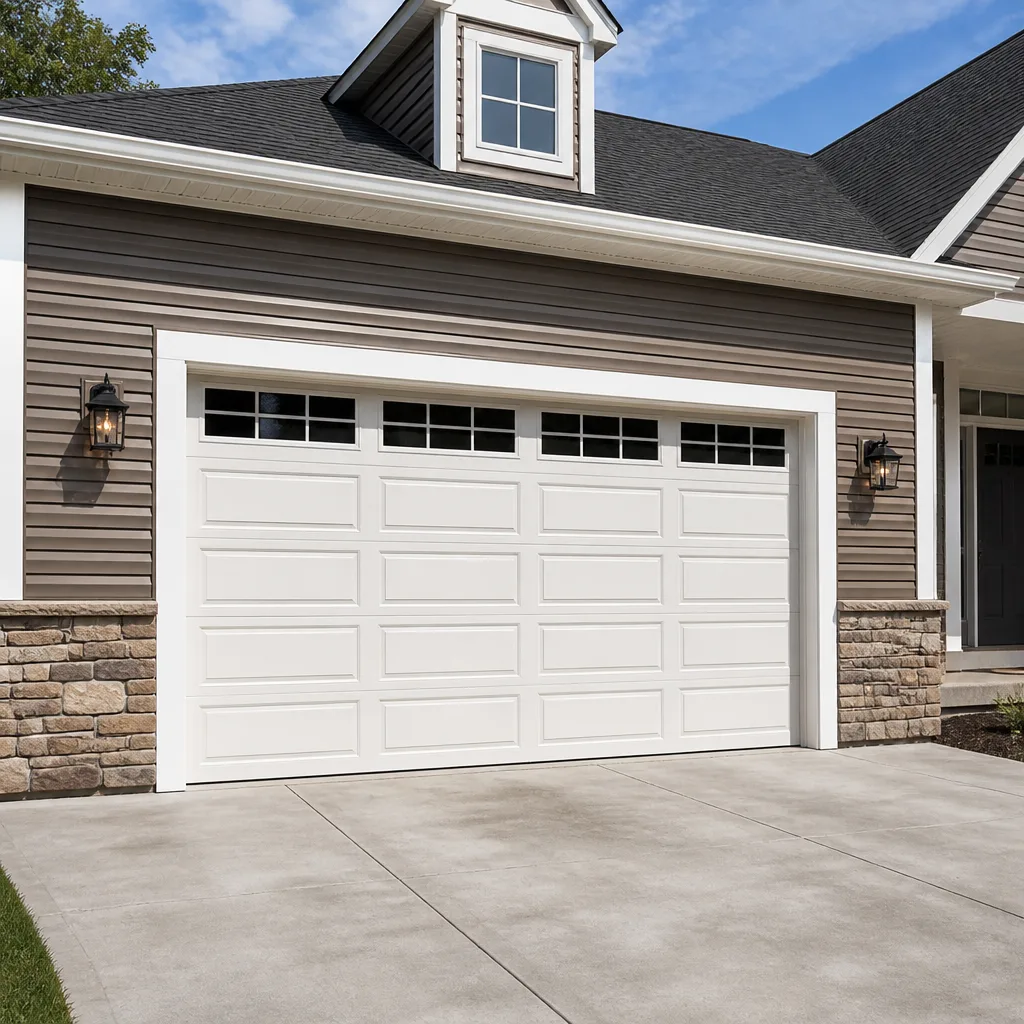 Raised-panel steel
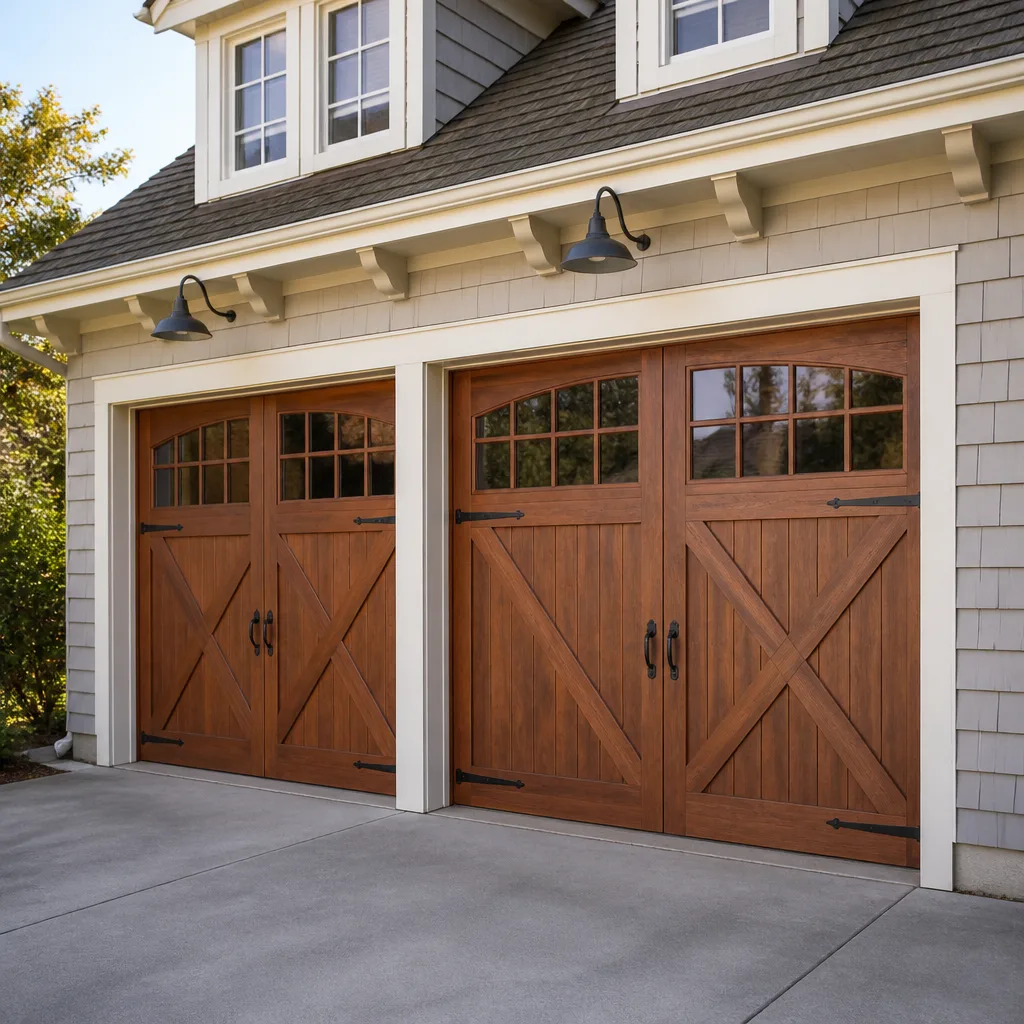 Carriage house
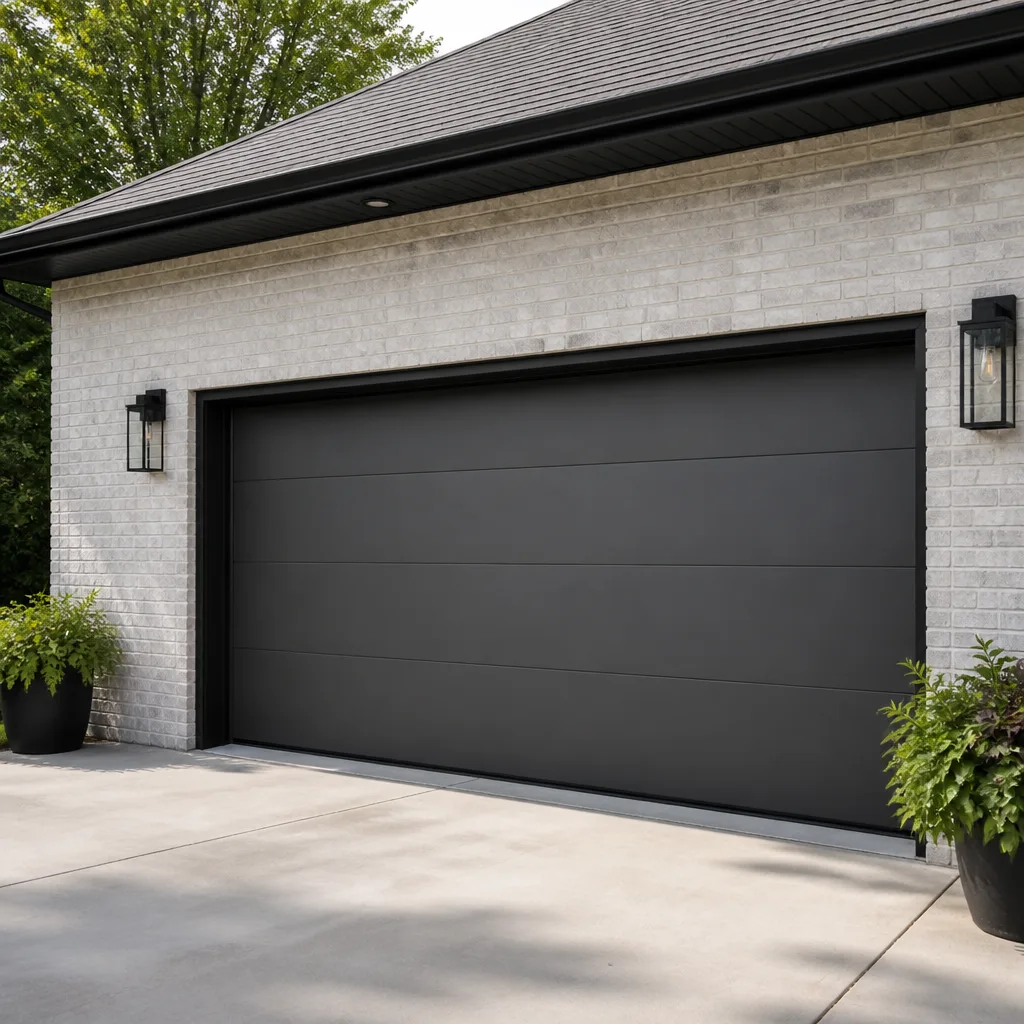 Modern flush
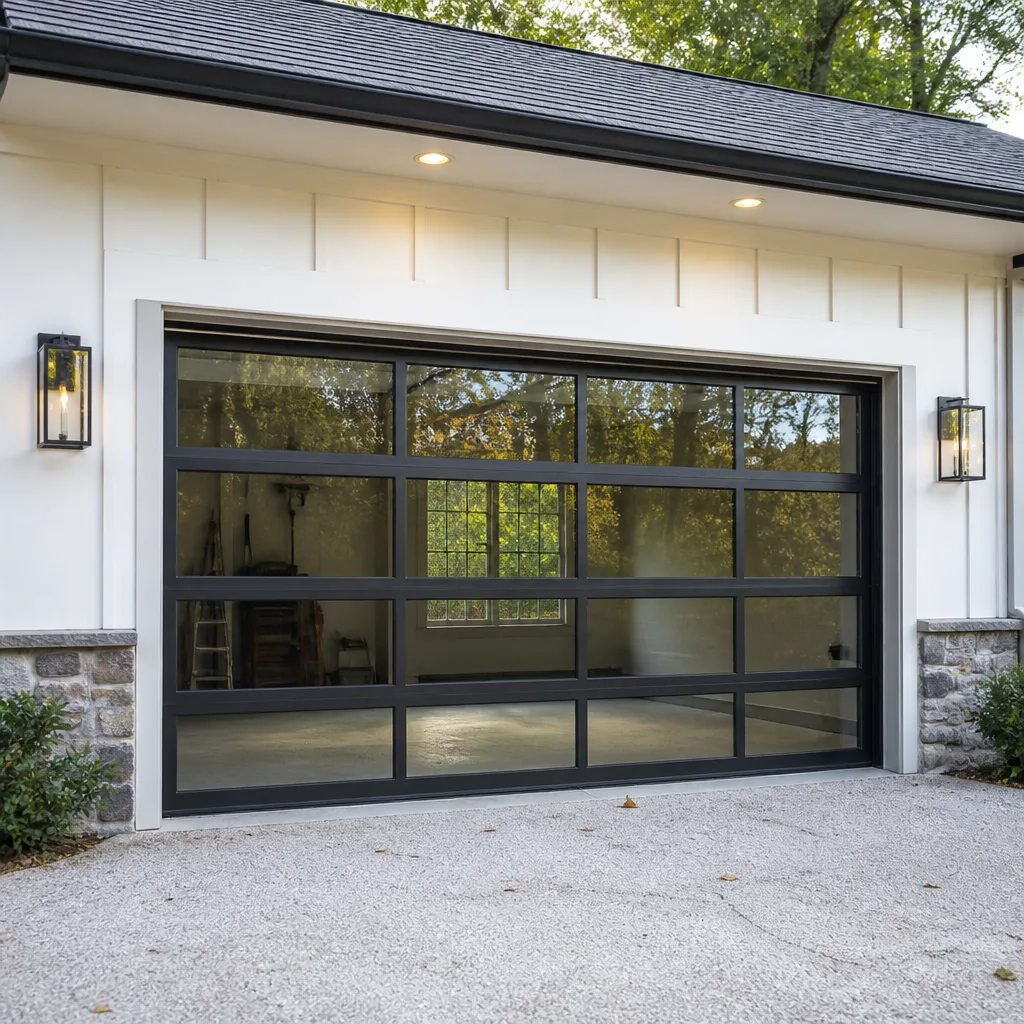 Full-view glass
 LiftMaster openers
 Chamberlain openers
Full 25-point door and opener safety check with every visit - springs, cables, rollers, tracks, and your LiftMaster or Chamberlain opener included
You get a price before we start. It does not change when the pro arrives.
Get your free estimateGarage Door Warning Signs: A Forest Hill Homeowner’s Reference Guide
That grinding noise on the way up usually isn’t your opener. It’s a roller that’s lost its bushing, or a hinge that’s worn through and is now metal-on-metal. Homeowners hear the racket, assume the motor is dying, and buy a new opener. The actual problem stays untouched, and the door keeps eating itself. We see this misdiagnosis constantly in Forest Hill. Garage doors fail in patterns, and nearly every failure announces itself through sound, movement, or something you can spot from the driveway days before the door quits. This guide teaches you to read those signals correctly, separate a small fix from a real problem, and know exactly when to stop and call in someone who works on doors all day.
Quick Answer
Garage door warning signs fall into three groups: sounds (grinding, squeaking, popping, rattling), movement problems (slow, jerky, sagging on one side, reversing early), and visual clues (frayed cables, worn rollers, bent tracks, worn springs). Grinding usually points to rollers and hinges, not the opener. Popping or a loud bang often means a spring has failed. One-side sag points to a cable or worn roller. Any sign involving a spring, cable, or bent track is a stop-and-call situation because those parts are under extreme tension and dangerous to touch.
Styles & brands we work with
- Raised-panel steel
- Carriage house
- Modern flush
- Full-view glass
- LiftMaster openers
- Chamberlain openers
Table of Contents
- What Each Garage Door Sound Is Telling You
- Movement Warning Signs and What They Map To
- Visual Warning Signs: Same-Week vs. Can-Wait
- A Weakening Spring vs. a Spring About to Snap
- Warning Signs Specific to Forest Hill Winters
- When the Opener Is Actually the Problem
- How to Diagnose a Warning Sign in Four Steps
- Common Mistakes to Avoid
What Each Garage Door Sound Is Telling You
The sound is the first and cheapest clue you get. A garage door in good shape makes a low, even hum with a soft roll. Once you hear something new, match it to a cause before you spend a dollar. Here’s how we break down the four sounds homeowners describe most in Forest Hill.
- Grinding: Metal dragging on metal. Almost always a roller that’s lost its bearing or a hinge that’s worn flat. It is not the opener unless the opener is straining against a binding door, which is a different sound. Left alone, grinding wears the track itself, and a new track costs far more than a set of rollers.
- Squeaking: Dry hinges, dry rollers, or a torsion tube that needs lubrication. The cheapest problem on this list to fix. Ignore it long enough and the squeak becomes grind as parts wear through.
- Popping or a bang: A torsion spring letting go, or a cable jumping its drum. This is the sound that stops people mid-step in the kitchen. A snapped spring means the door will not lift, and it should not be forced.
- Rattling: Loose bolts, a sagging bottom bracket, or the panels themselves working apart. Rattling on an older Amarr or Wayne Dalton door often means loose fasteners that a technician can tighten and check in one visit.
Sound tells you where to look. What you should not do is spray everything with lubricant and stop there. Lube quiets a squeak for a week; it does nothing for a worn bushing or a fraying cable that’s making the same area noisy for a mechanical reason.
Movement Warning Signs and What They Map To
Watch the door travel, not just the noise. Movement problems show you which component is losing the fight before it fails outright. A door that used to glide and now hesitates is giving you notice.
- Slow travel: If the door moves sluggishly on the way up but seems fine coming down, a weakening spring is usually the culprit. The opener is doing the lifting the spring should be doing, and eventually the opener will lose that race.
- Jerky travel: Start-and-stop travel usually points to a binding track, a bent roller, or debris on the track. A door that stutters is a door under uneven stress, and uneven stress shortens the life of every part attached to it.
- Sagging on one side: One corner drops lower than the other, or one side rises first. In most cases that’s a cable problem or a worn roller on that side. It is never something to balance with a shim or a wood block.
- Reversal before fully closing: The door goes down, then pops back up before it reaches the floor. Sometimes it’s a misaligned safety sensor. Sometimes it’s the opener’s force setting reacting to a binding door. The sensor is a homeowner check; the force setting is a technician call.
Here in Forest Hill, the movement problems we see most in winter track back to the same two causes: ice at the floor seal and condensation on the cables. We cover both in the winter section below. For a door that’s already stuck or off its track, our garage door repair team handles the diagnosis and the fix, and emergency calls are part of what we do because a door that won’t close leaves the house open.
Visual Warning Signs: Same-Week vs. Can-Wait
Some things you can see from the driveway are urgent. Others are housekeeping. Getting this distinction right saves you an after-hours call and, more importantly, keeps you from standing under a part that’s under tension. Here’s the honest ranking.
Same-week attention (a technician should see it)
- Frayed or broken cables: A single strand poking out of the cable sleeve is the start of a full failure. Cables and springs are under enough tension to cause serious injury if they let go while someone is near them. Do not touch, cut, or attempt to adjust a cable.
- Bent or bowed track: A dented track throws off roller alignment across the whole door. Small bends sometimes look cosmetic; they aren’t, because they accelerate roller wear.
- Gaps in the torsion spring: A visible separation in the coils of a torsion spring is a red flag, not a style. We’ll explain what separates a weakening spring from a failing one just below.
- Hinges pulling away from the panel: When a hinge starts tearing out of the door skin, the panel itself is at risk. On a Craftsman or Clopay door, a single replaced panel is a scheduled job, not a same-day emergency, but it should not wait months.
Can wait for a scheduled visit
- Worn rollers: Flattened or cracked nylon rollers make noise and add stress, but they rarely fail suddenly. Get them looked at on your next scheduled call.
- Dry weatherstripping: A cracked floor seal lets in drafts, water, and pests. Worth replacing, not worth a same-day call.
- Minor paint and panel scuffs: Cosmetic only. No safety implication.
The visual signs you should never try to fix yourself are the ones that involve a spring or a cable. Both are tensioned parts, and getting them wrong can mean a serious injury. That’s why spring repair is a job we do as a specialist service, not something to hand to a general handyman.
A Weakening Spring vs. a Spring About to Snap
Homeowners ask this a lot, and the difference matters for how you handle the door. A weakening spring makes the door feel heavy and slow. A spring about to fail is holding tension it can’t sustain, and when it snaps, it’s a loud, violent event with a part whipping around inside the track assembly. You want to catch the second case before it happens, and the first case before it turns into the second.
Here’s how we describe the distinction:
- Weakening spring: The door still opens, but it feels heavier than it used to. The opener works harder, the door moves slowly, and the opener may even strain at the halfway point. This is the door telling you the spring has lost pre-tension and the opener is compensating. Schedule service before the opener becomes the second casualty.
- Spring about to fail: You might see gaps between the coils of a torsion spring, or the door may feel like it’s holding more weight than the spring can carry. A section of the spring looks stretched compared to the rest. This is the point where you stop cycling the door unless you have to, and call a technician. Do not try to release tension yourself.
Both cases are a spring repair conversation, but the timing and the risk are different. A weakening spring can usually be scheduled. A spring showing visible gaps should be dealt with promptly and the door left still. If you’re unsure which situation you’re looking at, the safest move is to leave the door down and call. Our technicians have up to 13 years of experience and work on torsion springs as a dedicated service, not a side job.
Spring repair pricing is per spring, and a matched pair is normally replaced together because the two springs wear at the same rate. Expect a pair to cost roughly double a single. Your written quote sets the final price, and we give that quote before any work starts.
Warning Signs Specific to Forest Hill Winters
Forest Hill winters put garage doors under a set of stresses that warm-weather guides skip entirely. The same door that runs quietly all summer can start grinding in January for reasons that have nothing to do with worn parts. Here’s what to watch for as the temperature drops and what each sign tells you.
Ice-bonded floor seals
When the rubber seal fuses to the concrete floor, the door lifts and takes the seal with it, then the whole assembly fights the pull. You’ll hear a ripping sound, and the opener will strain. Get the seal freed and treat the floor. If this happens repeatedly, the seal is at the end of its life and needs replacing.
Condensation-corroded cable ends
Cold nights and warm days drive condensation that settles on cable ends and the drum. Rust at the cable end is a sign the whole cable is worth a look. A frayed or corroded cable end is a same-week item. This is a safety point; cables fail without much warning, and they fail hard.
Thermal expansion binding
Metal panels and tracks expand and contract differently as temperatures swing. When that happens, a door that was fine in October starts binding in the track. You’ll see jerkiness and hear rattling. A technician can re-adjust the track and check the rollers before the door chews through them. A door that’s been adjusted once rarely needs it again.
If a door has been sitting since fall, check it before the first really cold morning rather than after. The best time to catch a winter problem is before it’s a frozen morning with the car blocked in the garage.
When the Opener Is Actually the Problem
Here’s the correction to the opening point: the opener does fail sometimes. It just fails less often than the other parts, and when it does, it gives its own set of signs. We work on the major opener systems, including LiftMaster, Chamberlain, Genie, and Craftsman, and the same diagnosis patterns hold across them.
- Door reverses on its own after fully closing: Often the safety sensor or the force setting. Check whether anything is in front of the sensor first.
- Opener hums but the door doesn’t move: The motor is running but the drive isn’t engaging. That’s usually a stripped gear or a broken coupler, not a dead motor. A new opener is not always the answer.
- Opener runs but the door barely lifts: The spring is more likely the culprit than the opener. Don’t replace a working opener to fix a spring problem.
- Remote and wall switch both dead: Often a logic board or a power issue, not a dead unit. Our garage door opener repair team can confirm before you spend on a replacement.
Smart and connected openers have their own failure modes: a firmware update that resets the travel limits, a Wi-Fi module that drops off, an app that won’t pair. These are rarely mechanical failures, and they’re worth a diagnostic visit before anyone talks about replacement. If you’re upgrading to a connected system, we also install and diagnose those.
How to Diagnose a Warning Sign in Four Steps
Before you call, you can narrow the problem yourself with a safe four-step check. None of these steps require you to touch a spring or a cable, and that’s deliberate.
- Listen with the door down and the opener off. Stand next to the door and listen. Note the exact moment in the travel when the sound starts. That timing is a diagnostic clue.
- Watch the door travel. Cycle the door once and watch the two sides. Does one side lag? Does it stutter? Does it stop short? This maps the door to a specific component.
- Look but don’t touch. Check for frayed cables, bent tracks, worn rollers, missing fasteners, and gaps in the spring coils. If you see a broken or frayed cable, stop there. Do not handle it.
- Check the opener’s manual release. With the door down, pull the manual release to disconnect the opener. If the door is still hard to lift by hand, the problem is in the door and springs, not the opener.
That last step is the one most people skip, and it’s the one that saves them the most money. If the door is heavy by hand, no opener is going to fix it. If it lifts easily by hand but not with the opener, the opener is your problem.
Common Mistakes to Avoid
- Replacing the opener when the door is the problem. A strained opener is often a symptom of a weakening spring or a binding door. Confirm the cause before you buy a unit.
- DIY spring and cable replacement. These parts are under enough tension to cause serious injury. A trained technician with the right tools is the only safe route. This is not a job for a homeowner or a general handyman.
- Using WD-40 as a fix. Lubricant quiets a squeak and hides a worn bushing. It does not repair a worn part. It may mask a grinding noise long enough for the track to get damaged.
- Forcing a heavy door with the opener. If the door feels heavy by hand, stop cycling it. Each cycle under strain wears the opener’s gears.
- Ignoring a frayed cable because the door still works. A single broken strand is the start of a full failure. Get it looked at the same week, before it lets go.
- Adjusting the opener’s force setting to “make it work.” Turning up the force to push a binding door just burns out the opener faster and can hide a mechanical problem that needs fixing.
- Waiting until winter to check the door. In Forest Hill, a door that was fine in fall can be frozen in place by January. A quick check in late autumn catches ice-bonded seals and corrosion before they’re a morning disaster.
See the difference
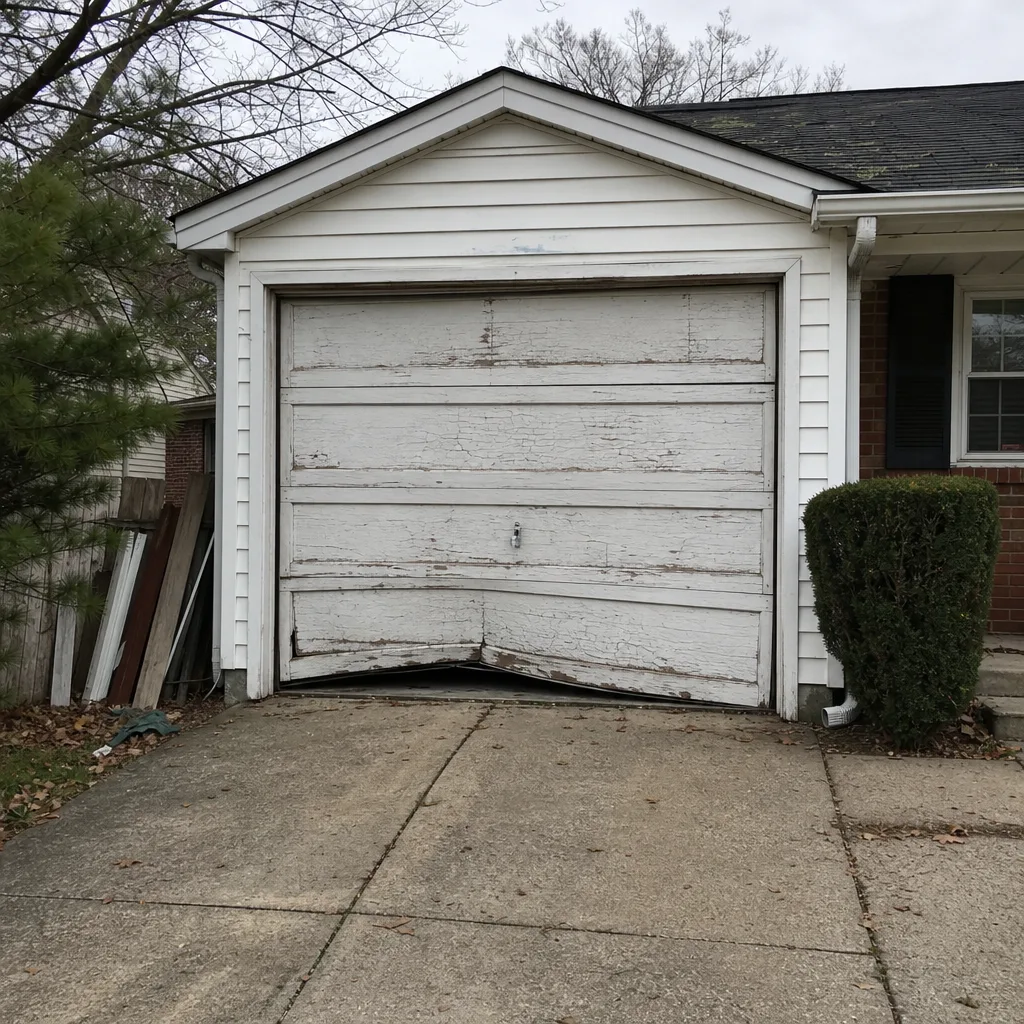 Before
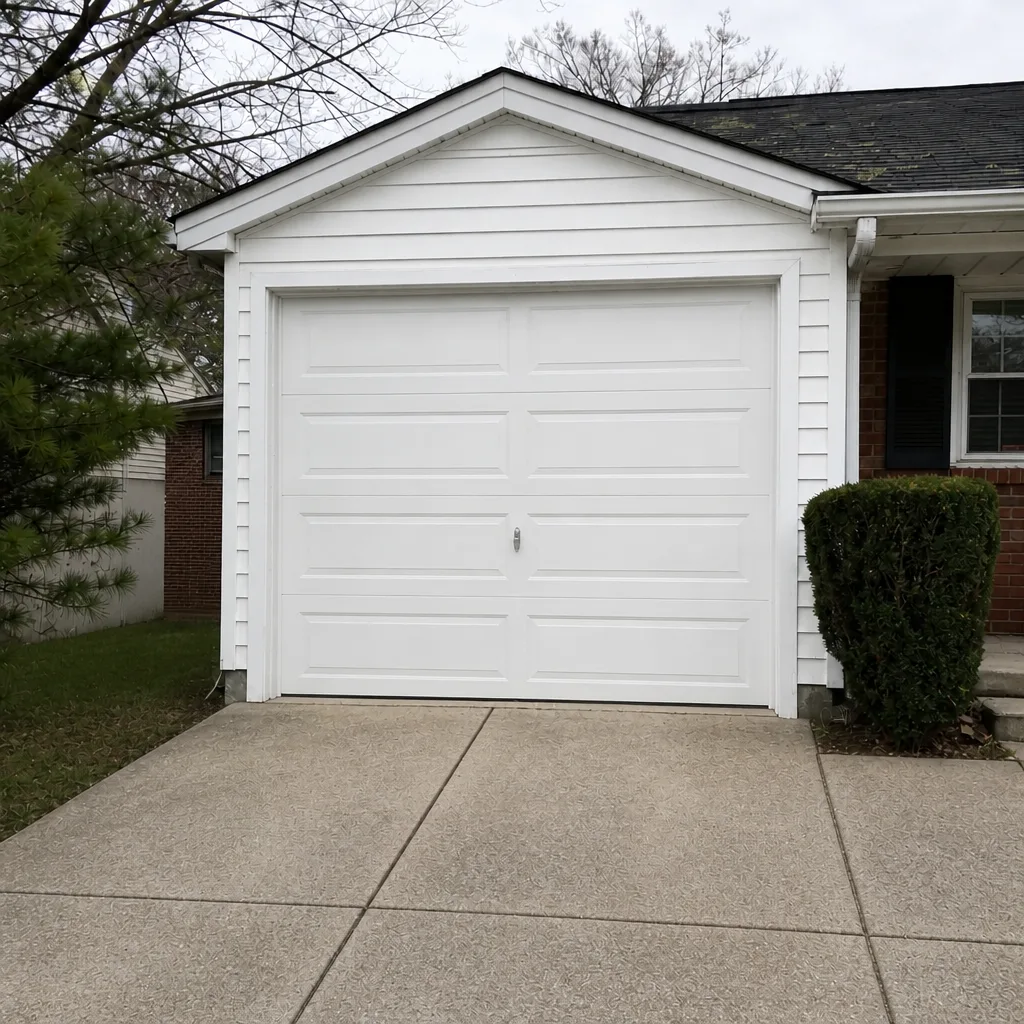 After
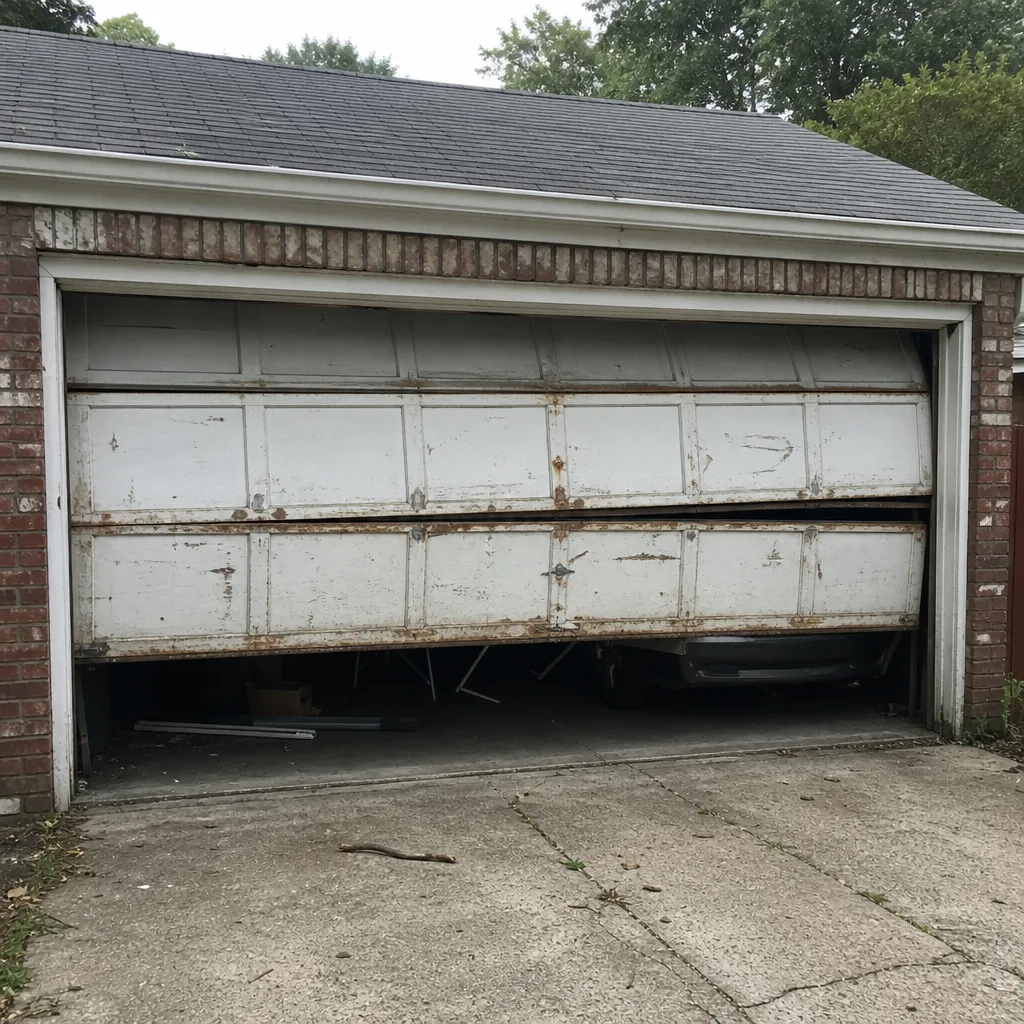 Before
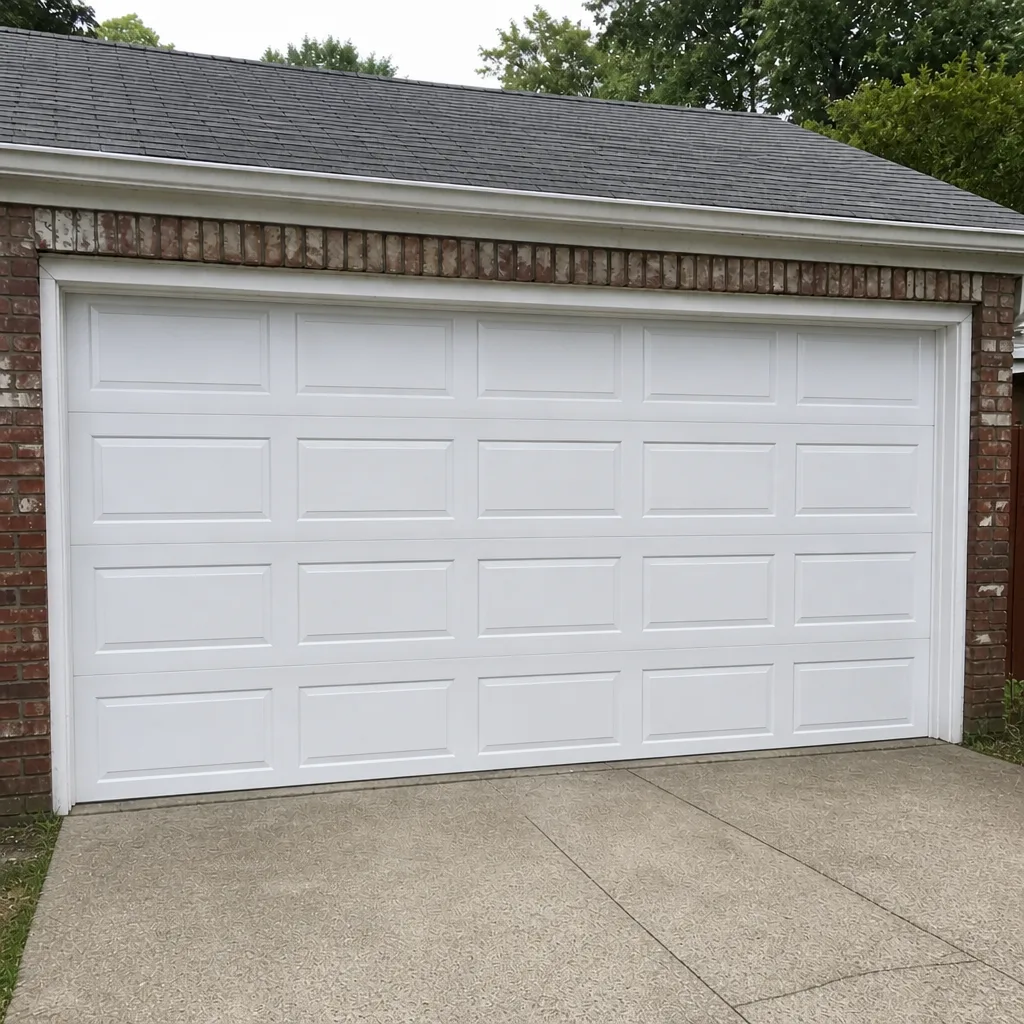 After
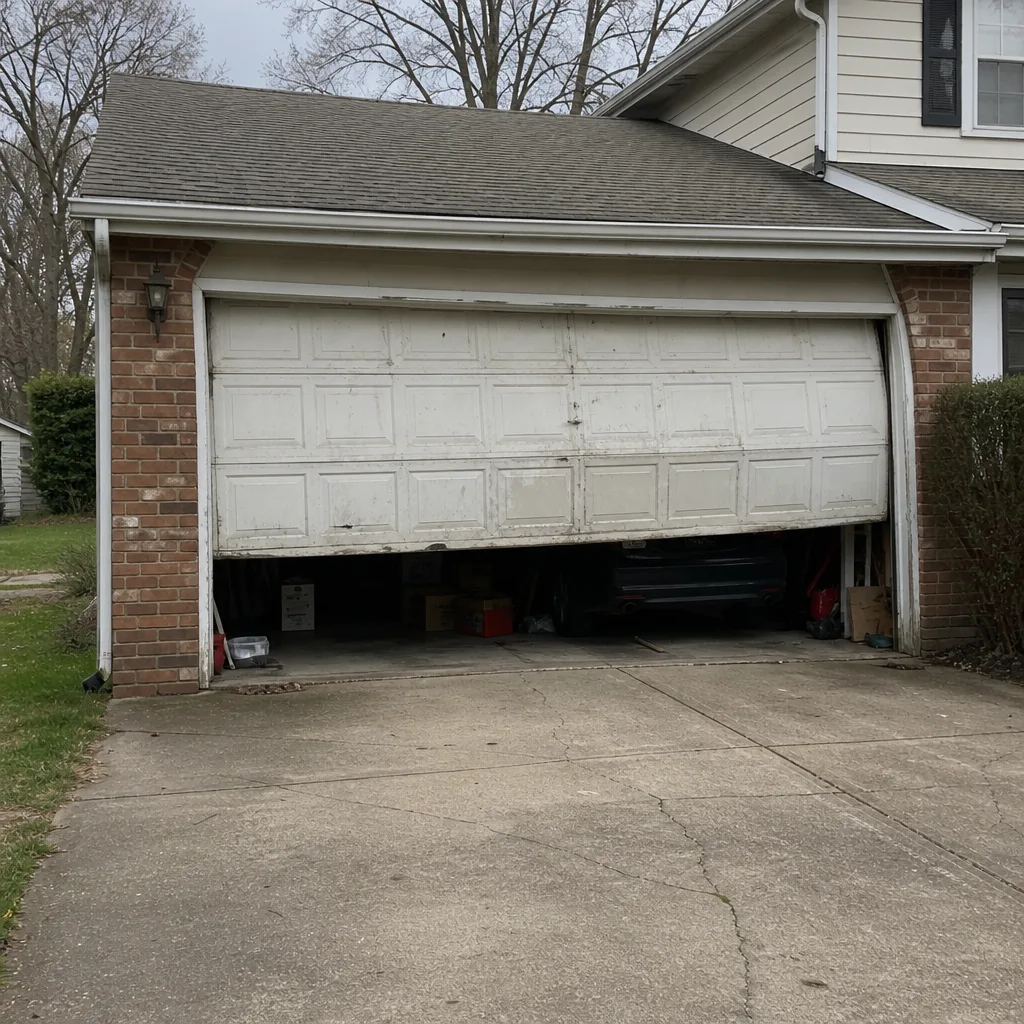 Before
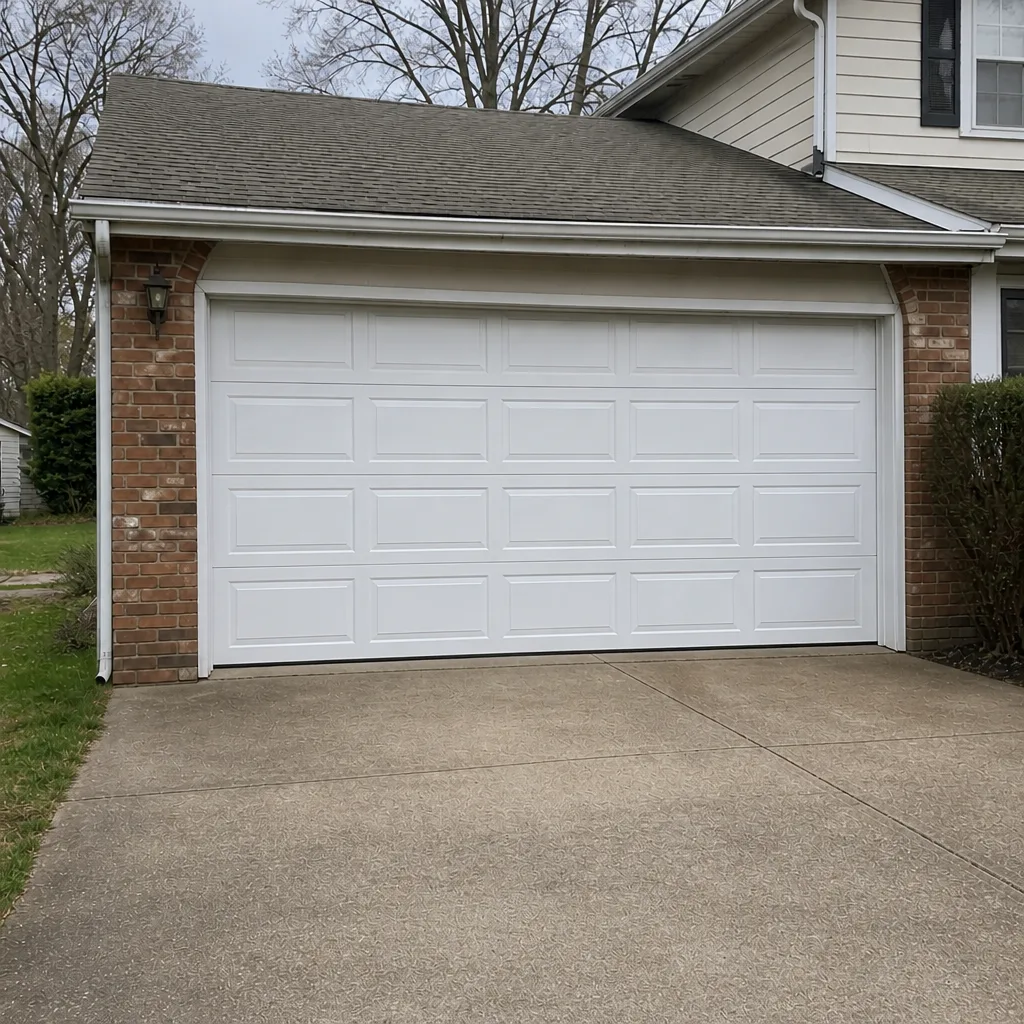 After
When to Call a Professional
Call a professional the moment you see any sign involving a tensioned part: a frayed or broken cable, a gap in a torsion spring, a popping sound, or a door sagging to one side. Same if the door reverses on its own after closing, or if the opener hums but the door doesn’t move. Those are not DIY checks. They’re stop and call. On the other hand, noisy rollers, squeaking hinges, and a binding track are worth a scheduled visit but rarely an emergency. When you’re not sure which side of the line a problem is on, that uncertainty is reason enough to get eyes on it. Forest Hill Garage Door Repair offers free estimates in Forest Hill – call (877) 492-2570. We work on Amarr, Wayne Dalton, Raynor, and Craftsman doors alongside the rest of the major brands, and our technicians have up to 13 years of experience. We schedule, measure, and quote before any work begins, and the written price is the price.
Frequently Asked Questions
It’s almost always the door, not the opener. Grinding usually means a roller has lost its bearing or a hinge has worn flat, and the metal is dragging on metal. The opener can sound strained when the door binds, but the cause is downstream of the motor. A quick diagnostic visit confirms it, and replacing a few rollers costs far less than a new opener.
Look for visible gaps between the coils of a torsion spring and a door that feels heavier to lift than it used to. If you can see a stretched section or a gap where the coil used to be tight, the spring is under tension it can’t sustain. Don’t cycle the door more than you must and call a technician. Do not try to release the tension yourself; that’s the most dangerous thing you can do on a garage door. Call (877) 492-2570 for a free estimate.
No. Garage door cables are under extreme tension and can cause serious injury if they let go or if you release one without the proper tools. A frayed cable is a same-week call to a technician, not a DIY repair. The same goes for springs. Anyone who tells you otherwise doesn’t understand the forces involved.
The most common cause is a misaligned or dirty safety sensor at the base of the door. Check that nothing is blocking the sensor beam and that the sensor eyes aren’t covered. If the sensor looks clean and lined up and the door still reverses, the opener’s force setting may be reacting to a binding door, and that’s a technician diagnosis. Do not turn up the force to force the door closed.
Yes, and they follow a pattern. The most common winter issues in Forest Hill are ice-bonded floor seals, condensation corrosion on cable ends, and thermal expansion making the door bind in the track. Most of these are preventable with a check in late autumn before the first hard freeze. If a door is already stuck or noisy, an emergency call gets it looked at the same day.
Cost depends on the part and the job. A roller or hinge replacement is a small repair. A cable or spring repair costs more because it’s a safety-critical service that needs a trained technician. The written estimate we give before work starts is the final price, and we explain what’s being replaced and why. Call (877) 492-2570 for a free estimate on your specific door.
Repair is usually the answer for a single broken part: a spring, a cable, a roller set, an opener issue. Replacement makes more sense when the door has structural damage, multiple failing panels, or when the repair cost is close to the cost of a new door. Our garage door installation team can walk you through the comparison with a written quote for both options.
The Bottom Line
Garage door failures almost always announce themselves first. Grinding points to rollers and hinges. Squeaking is dry moving parts. Popping or a bang means a spring has failed or is failing. Slow, jerky, or one-side travel points to a weakening spring, a binding track, or a cable problem. Visual signs split cleanly into same-week items (frayed cables, bent track, spring gaps, pulling hinges) and can-wait items (worn rollers, dry seals, cosmetic scuffs). Forest Hill winters add ice-bonded seals, cable-end corrosion, and thermal binding to the list. Read the sign, match it to the part, and call before a cheap fix becomes an expensive one. For the full service list and local details, see Forest Hill Garage Door Repair.
If you’re looking at a warning sign right now and you’re not sure whether it’s the small fix or the real one, that’s exactly the call we want. Forest Hill Garage Door Repair gives free estimates in Forest Hill, we quote and agree the price before any work starts, and our technicians have up to 13 years of experience across LiftMaster, Chamberlain, Genie, Clopay, Amarr, Wayne Dalton, Craftsman, and Raynor systems. Same-day and emergency service is available for the situations that can’t wait. Call (877) 492-2570 for a free estimate and get the diagnosis right the first time.
Written by the team at Forest Hill Garage Door Repair.